↓
 
Biomass Rules

Biomass Rules

Adding Clarity to All Things Bio!

Biomass Rules
  • Home
  • About Biomass Rules
  • Contact Biomass Rules
  • Biomass Links that Rule
  • Everything BIO
  • Bio-Blog

Category Archives: science

Post navigation

← Older posts
Newer posts →

Morphing Waste to Revenue – Breaking Free of Old Views

Biomass Rules Posted on July 1, 2024 by Mark JennerJuly 1, 2024

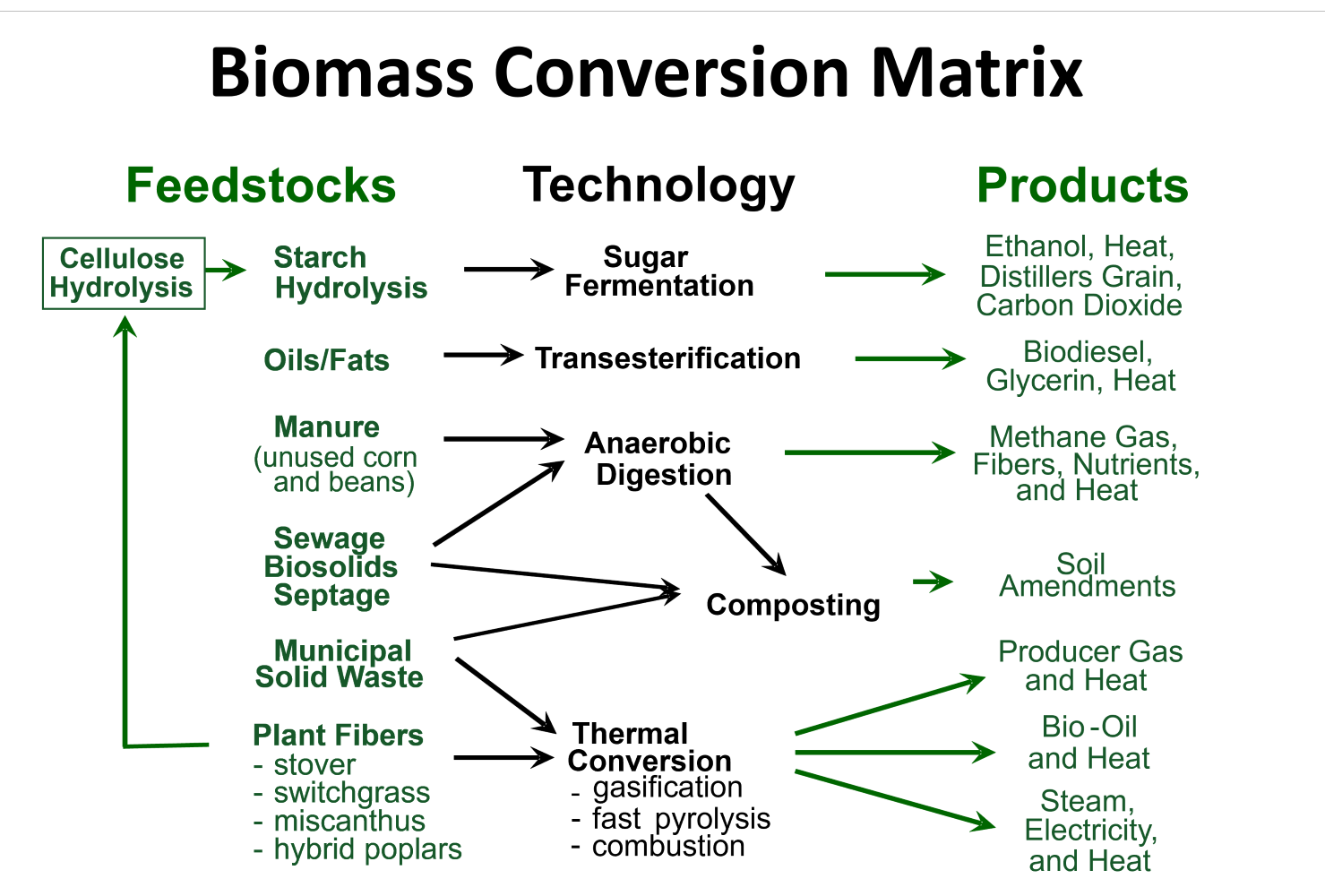
Once again, strolling back to the future, this matrix of biomass products was created 20 years ago.  It still relevant and ties together the preceding themes nicely on a different level. Outputs are dependent on the inputs, or, y = … Continue reading →

Posted in analytics, economics, science | Tagged breaking free, byproducts, inputs, morphing waste, morphing waste to revenue - breaking free of old views, multiple markets, old views, outputs, products, revenue, services, system of equations, Technology, y=f(x) | Leave a reply

Technology and Hog Manure Utilization

Biomass Rules Posted on June 26, 2024 by Mark JennerJune 26, 2024

The most successful manure producers are also the most creative manure users.  Or at least they are creative in facilitating the use of manure by others.  Being awesome is a lot of work. Recall that technology is defined as y=f(x). … Continue reading →

Posted in policy, production, science | Tagged Concentrated Animal Feeding Operations (CAFO), hog, management, manure, politics, processing, rule, Technology, technology and hog manure utilization, tool, transformation, treatment, US EPA, utilization | Leave a reply

Technology Describes Outputs as a Function of Inputs

Biomass Rules Posted on June 25, 2024 by Mark JennerJune 25, 2024

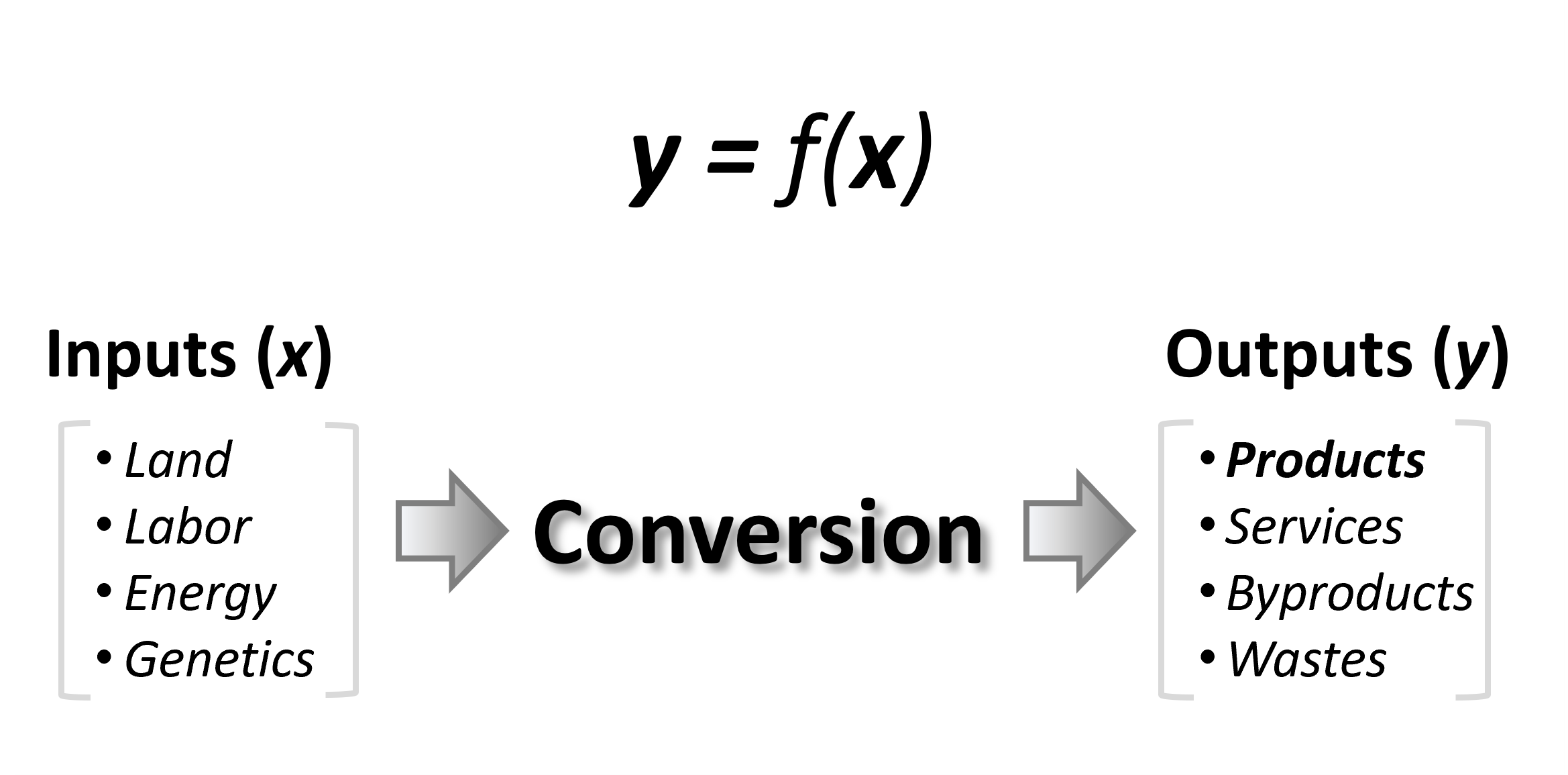
My career has been defined as y = f(x). Technology, and in this case, Outputs, y, are (created from,=,) a function of, f(), inputs, x.  In other words, how inputs are combined determines the technology.  Corn can be grown with … Continue reading →

Posted in economics, production, science | Tagged byproduct, CO2, function of inputs, naturally occurring inputs, non-traditional farm outputs, outputs, oxygen, photosynthesis, solar energy, Technology, technology describes outputs as a function of inputs, waste, y=f(x) | Leave a reply

Small Farms Transform Renewable Energy In 2022

Biomass Rules Posted on June 18, 2024 by Mark JennerJanuary 13, 2025

In the most recent post, the case was made that in their role as producers, farms transform inputs into outputs more than establish and maintain markets in the final goods and services, retail sector.  The 2022 Census of Agriculture also … Continue reading →

Posted in farm, production, science | Tagged $10000, 100 acres, 2022 Census of Ag, bioenergy, data completeness, energy, farm size, farm-produced, farm-produced energy In 2022 Census of Ag, food, fuel, livestock feed, NASS, Quick Stats, supply chain, USDA | Leave a reply

The Producer (Farmer) Role is Transformative

Biomass Rules Posted on June 14, 2024 by Mark JennerJune 14, 2024

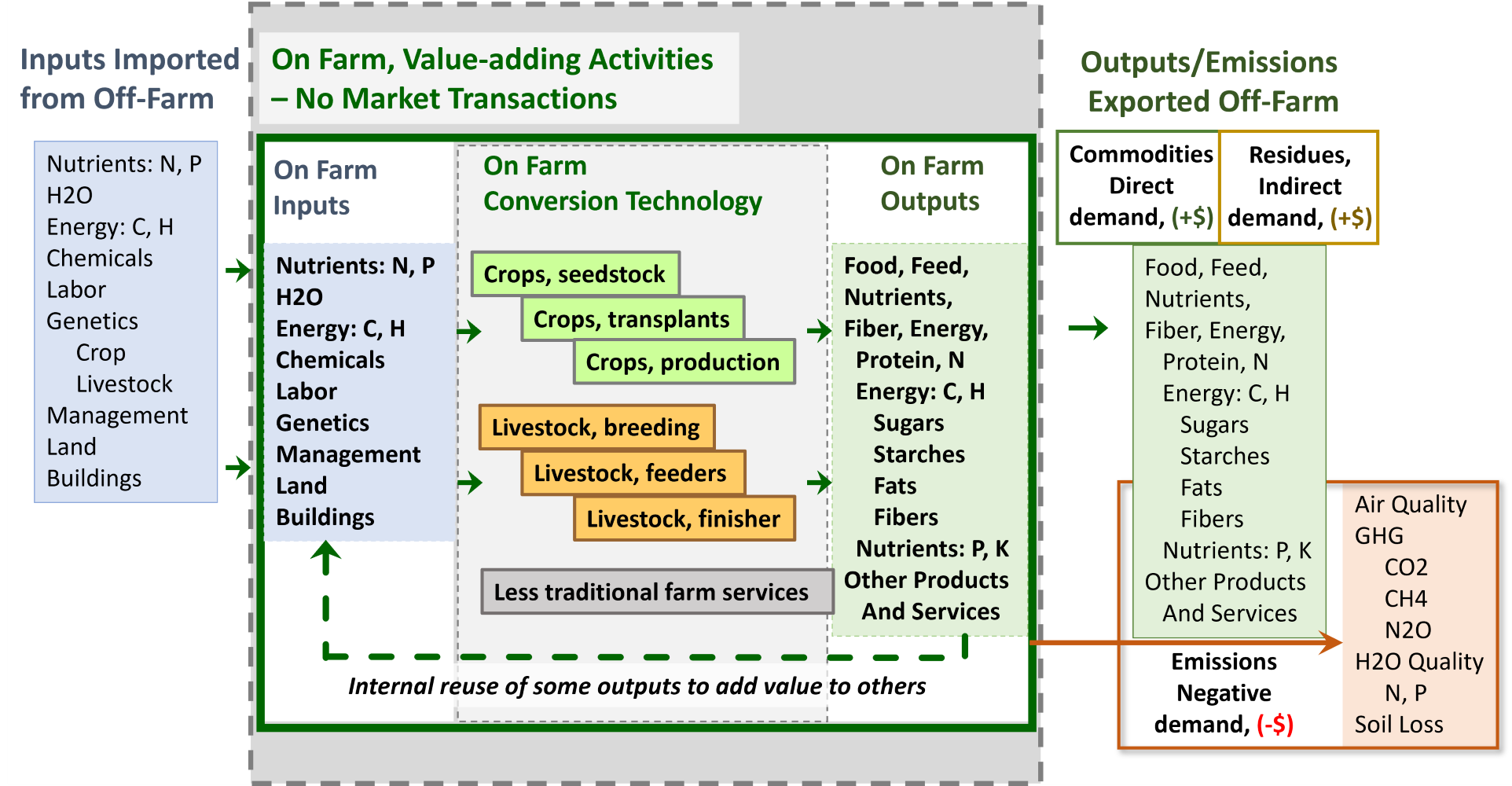
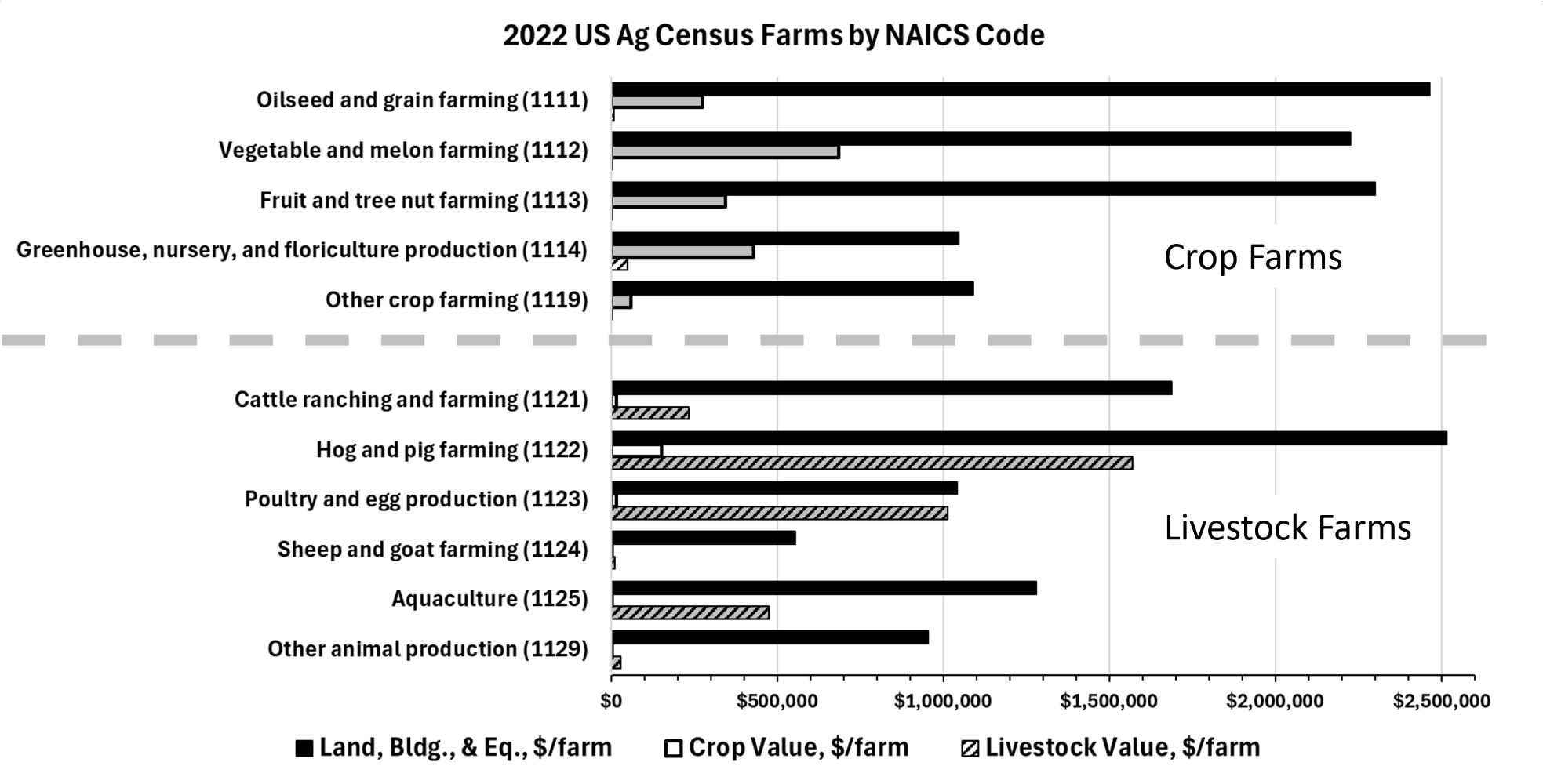
The previous post, The Price of Food Dominates Alternative Use Markets, sparked a desire to map out the farm-level activities into feed, fuel, and food.  This was an innocent effort and was not successful.  The transformations that occur on a … Continue reading →

Posted in economics, production, science | Tagged 2022 Census of Agriculture, acres, asset value, buildings, crop value, equipment, farmer, farms, feed, food, land, livestock value, NAICS, non-food, North American Industry Classification System (NAICS), producer farmer role is transformative, producer role, transformative, y=f(x) | Leave a reply

Manure is NOT a 4-Letter Word

Biomass Rules Posted on June 7, 2024 by Mark JennerJune 7, 2024

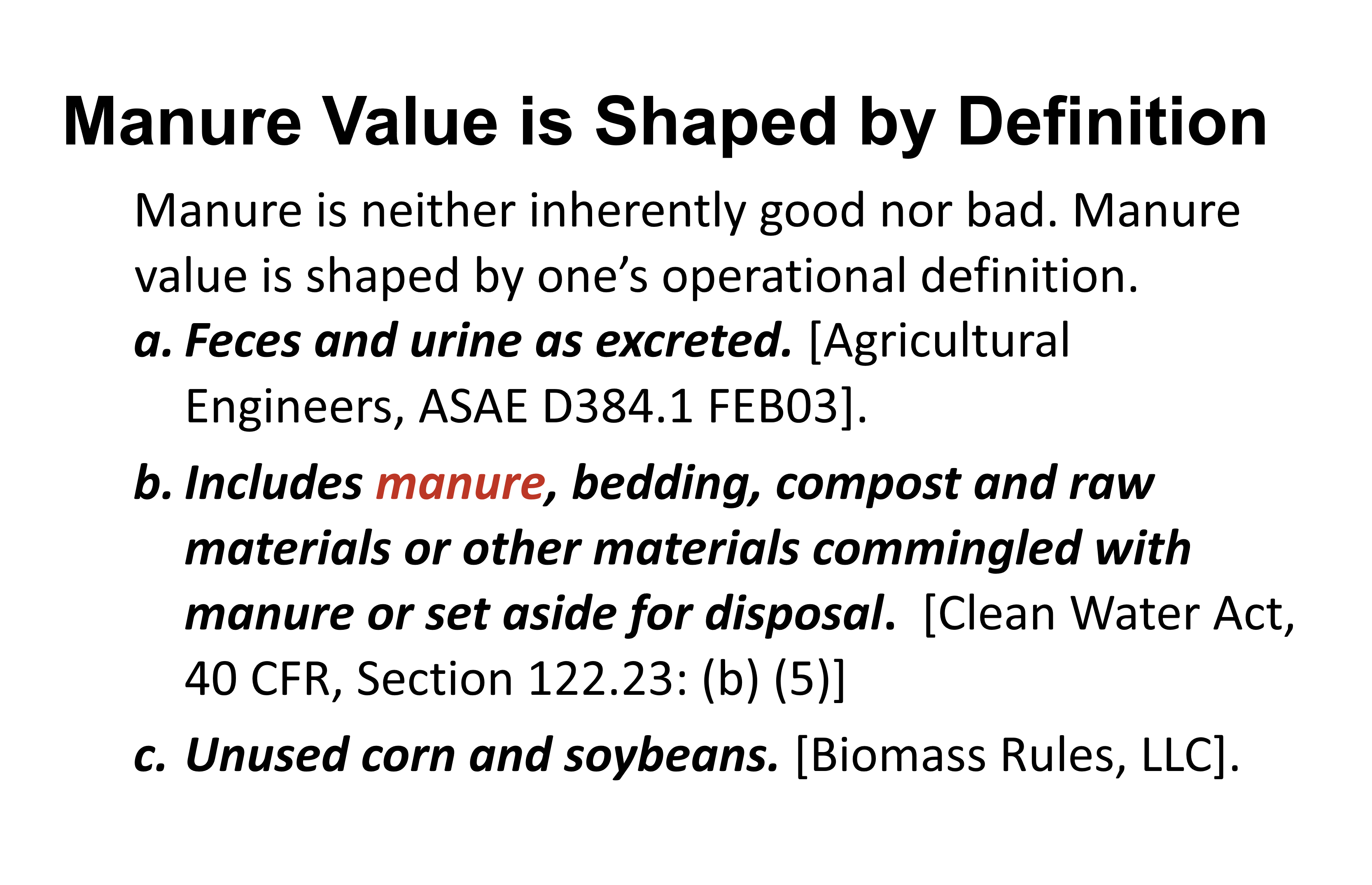
Manure doesn’t have to be a liability or associated with a 4-letter expletive.  Cultural shifts begin with the seminal definition of the issue in question.  If the initial definition is negative, options are bound by the limits of the definition.  … Continue reading →

Posted in definition, policy, science | Tagged bedding, biased definition, compost, cultural choice, definitive, feces and urine, limited options, manure, manure is not a 4-letter word, not a 4-letter word, policy, power, science, unused corn and soybeans | Leave a reply

The Biomass Utilization Story is All in the Data Delivery

Biomass Rules Posted on May 29, 2024 by Mark JennerMay 29, 2024

In 2008, a major publisher ran a story about where all the biomass feedstocks were.  It was a good story that brought attention to biomass as a fuel source.  But they used the National Renewable Energy Labs (NREL) ‘Total Tonnes’ … Continue reading →

Posted in production, science | Tagged biomass utilization, biomass utilization story is all in the data delivery, clarity, data delivery, dry, English, long, map, metric, moisture, National Renewable Energy Labs (NREL), short, sq km, square kilometers, tonnes, tons, total tonnes, yield | Leave a reply

Demand for Corn Stocks to Use – Real Adventures in Economics

Biomass Rules Posted on March 27, 2024 by Mark JennerApril 30, 2024

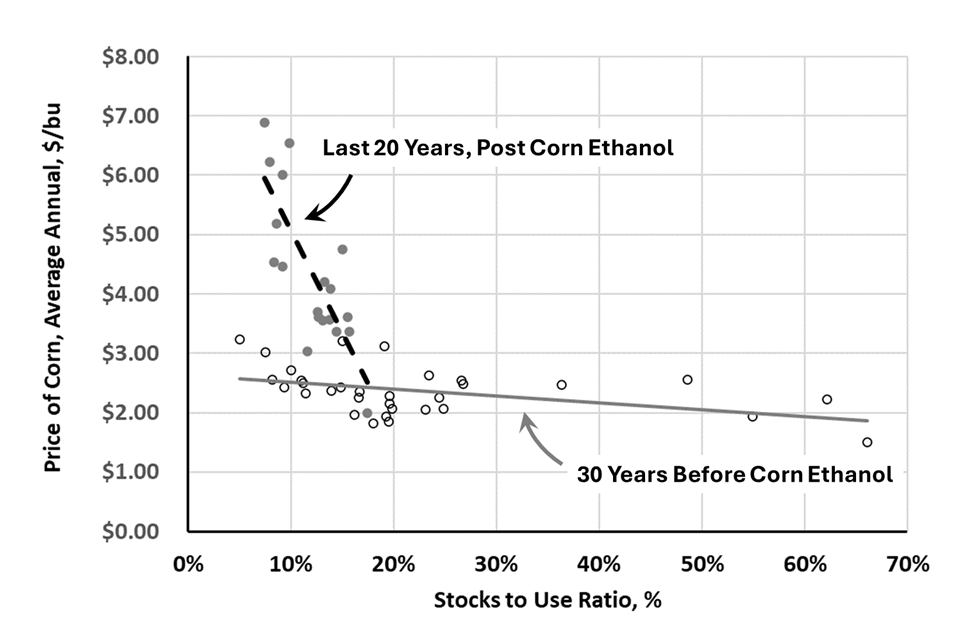
Most economic demand today manifests itself in report charts and news as a change over time. But traditional economic supply and demand curves do not have time in them (price x quantity). Demand drives any economy, but it doesn’t look … Continue reading →

Posted in analytics, science | Tagged after corn ethanol, before corn ethanol, corn stocks to use, demand, demand for corn stocks to use - real adventures in economics, elastic, grain merchandizing, inelastic, Kansas State University, price, real adventures in economics, reduced substitutes, supply and demand, University of Illinois | Leave a reply

US 2022 Ag Census Farms – Who are They?

Biomass Rules Posted on March 26, 2024 by Mark JennerApril 30, 2024

Abraham Lincoln commissioned the first census of farm by the Department of Agriculture 180 years ago.  Some of the data categories have not changed since then, like specifying a farm of 1 to 9 acres in size.  As a culture, … Continue reading →

Posted in production, science | Tagged $1000 of real or potential sales, 1 million farms less than 100 acres, 1.9 million farms, 2022 Ag Census farms, 5499 farms over 1000 acres with $1 million sales, acres, correct metric, farm size, farms, National Agricultural Statistics Service (NASS), US 2022 Ag Census, US 2022 Ag Census farms - who are they, USDA, value of sales | Leave a reply

Local, the Uneasy Substitute to Global

Biomass Rules Posted on March 25, 2024 by Mark JennerApril 25, 2024

As a quantitatively trained, free-market economist, I had been shaped to believe buying ‘local’ was a preference that was not cost-effective. But as I grew into a manure visionary and biomass systems economist, bulky and wet materials of limited value … Continue reading →

Posted in analytics, Biomass Rules, science | Tagged bioenergy, bulky, change, competitor, export, externality, global, import, livestock, local, local food, local the uneasy substitute to global, low-value, manure, opportunity cost, supply chain, systems, uneasy substitute, Word Bank | Leave a reply

Post navigation

← Older posts
Newer posts →

Recent Posts

  • Nora Goldstein and the BioCycle Legacy Continue
  • The Unsung Role of Gravity in Residential Energy System Operation
  • Three Flavors of Production Information Aid Farmers in January 2026
  • Buying a Farm with the Sweat of One’s Brow is an American Dream
  • Industry Terminology has a Powerful Policy Impact – Definitive Power

Mark Jenner, PhD
Biomass Rules
Greenville, IL 62246
c. 618.223.9331
e. biomassrules@gmail.com

Linked In Logo for Mark Jenner's Profile including Biomass Rules.com!

Mission Statement:
Providing solutions through the strategic utilization of all kinds of biomass; the development of new markets for food, fiber, and fuels; and streamlining regulations.

bio·mass:
ˈbī-ō-ˌmas. noun. 1 : the unit area or volume of living matter, 2 : plant materials and animal waste used as renewable feedstocks into new processes.

rules:
'rül. 1: noun. 1 : regulations, bylaws or governing procedure, 2: verb. a : to exert control, direction, or influence on, b : to declare authoritatively.

Manure…
is not a four-letter word.

©2024—Biomass Rules—All Rights Reserved.

↑