↓
 
Biomass Rules

Biomass Rules

Adding Clarity to All Things Bio!

Biomass Rules
  • Home
  • About Biomass Rules
  • Contact Biomass Rules
  • Biomass Links that Rule
  • Everything BIO
  • Bio-Blog

Category Archives: firm

Post navigation

← Older posts
Newer posts →

Ethanol Production Optimizes Outputs – University of Illinois

Biomass Rules Posted on March 3, 2025 by Mark JennerMarch 3, 2025

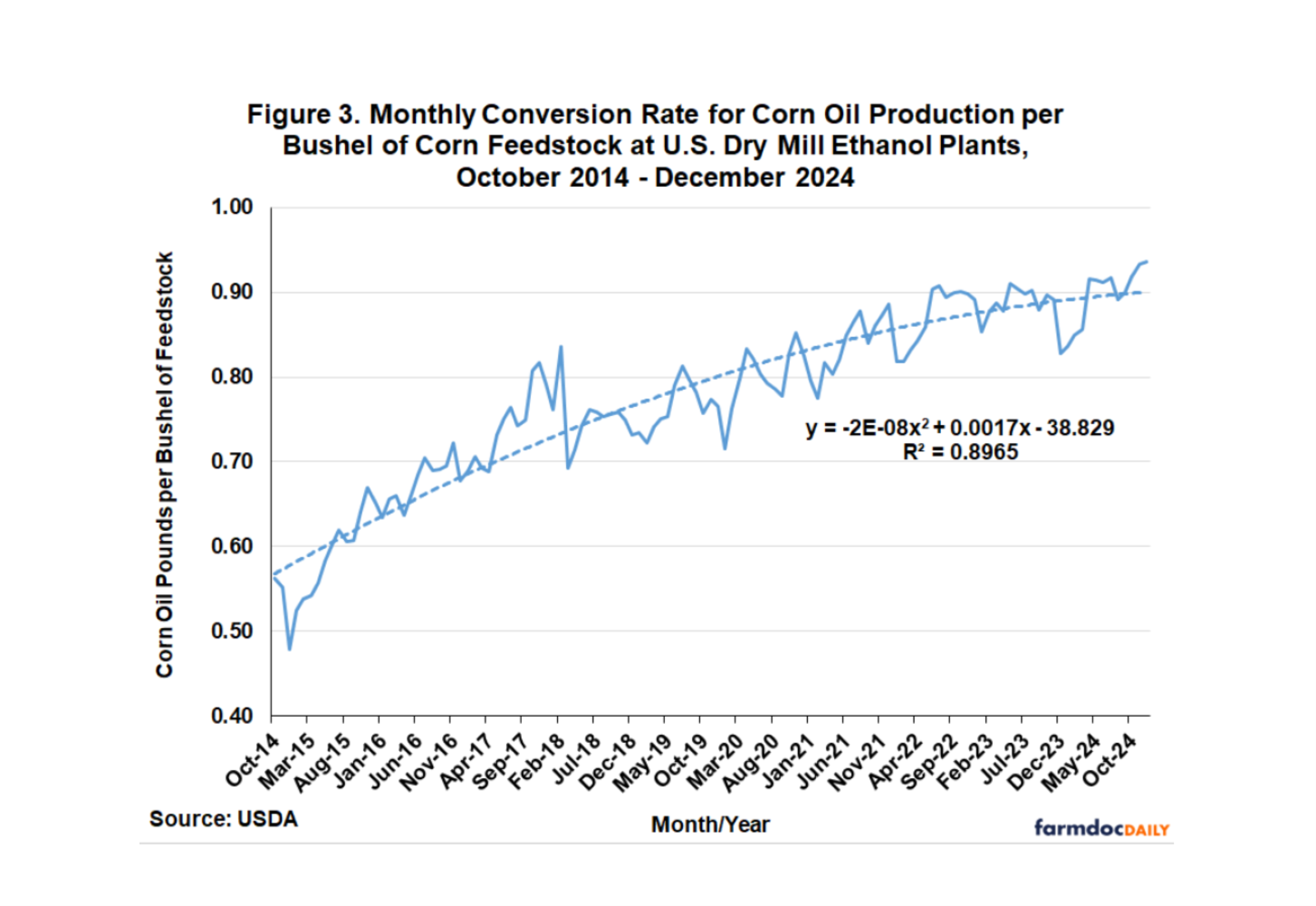
On the eve of USDA’s Ag Outlook Forum, Scott Irwin posted his analysis, Trends in the Operational Efficiency of the U.S. Ethanol Industry: 2024 Update.  It looks at four simultaneous outputs: ethanol, DDGS, corn oil, and CO2, from dry-mill ethanol … Continue reading →

Posted in analytics, economics, firm, policy, production, science | Tagged byproducts, carbon dioxide, co-products, corn oil, DDGS, dry mill, economies of scale, economies of scope, efficiency, ethanol, ethanol production optimizes outputs, ethanol production optimizes outputs – University of Illinois, Grain Crushings and Co-Products report, products, University of Illinois, USDA, wastes, wet mill | Leave a reply

Local Resource Endowment Comparative Advantages – Secret Life of Rural Communities

Biomass Rules Posted on February 6, 2025 by Mark JennerFebruary 6, 2025

When the benefits of an activity are difficult to put a dollar value on, or monetize, the traditional cost curves don’t tell the whole story.  Total costs are the sum of all the variable costs and fixed costs.  Undervalued community … Continue reading →

Posted in economics, firm, macro, science, Secret Life of Rural Communities, wealth creation | Tagged community assets, comparative advantage, cultural capital, empowering theory, if a tree falls, implicit benefits, implicit costs, junior livestock sale, local resource endowment, local resource endowment comparative advantages in the secret life of rural communities, lower fixed costs, lower total costs, lower variable costs, political capital, secret life of rural communities, social capital, thrift shop, volunteer army | Leave a reply

Making Sen$e of the Calculus of Food Price Increases

Biomass Rules Posted on January 30, 2025 by Mark JennerJanuary 30, 2025

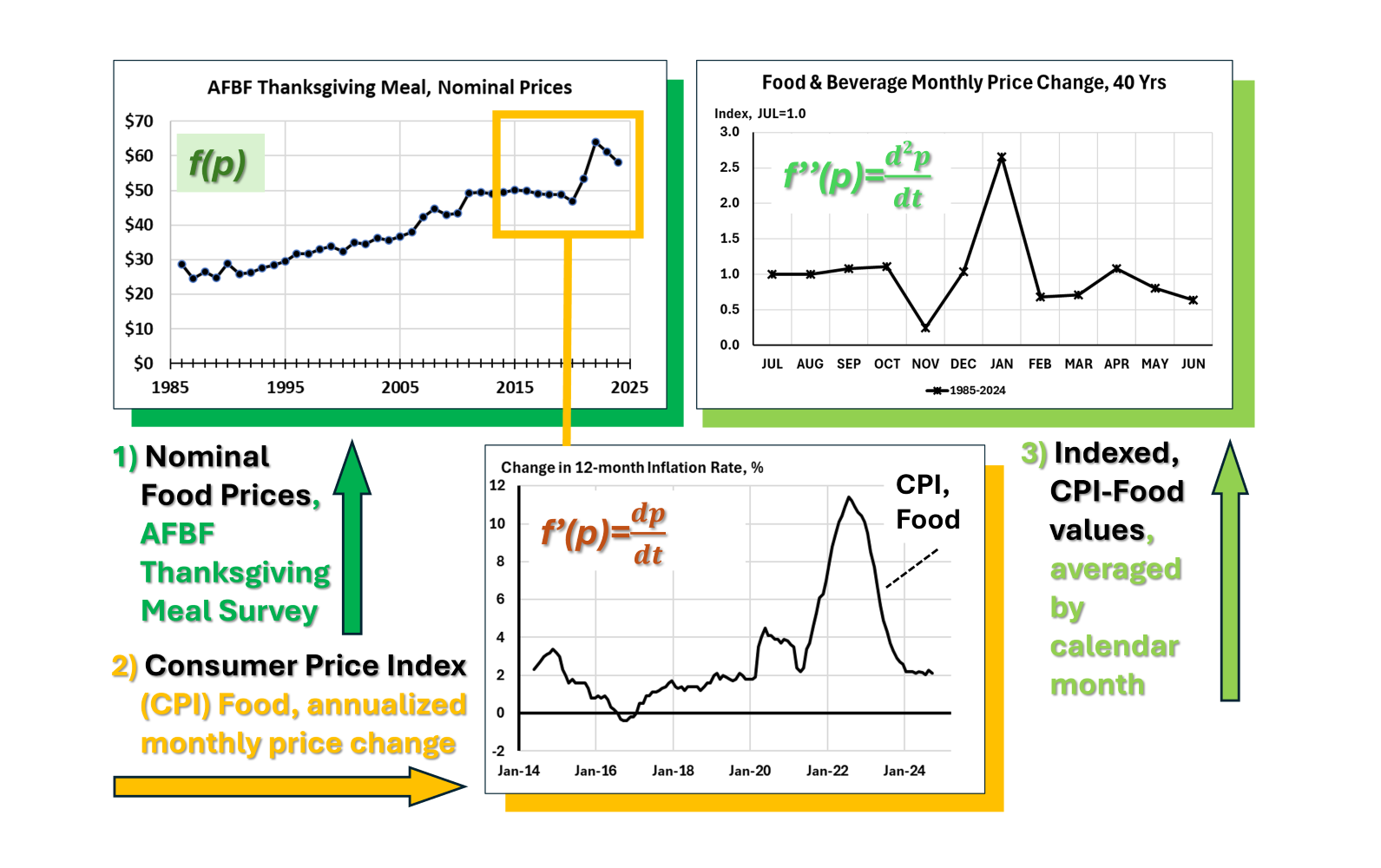
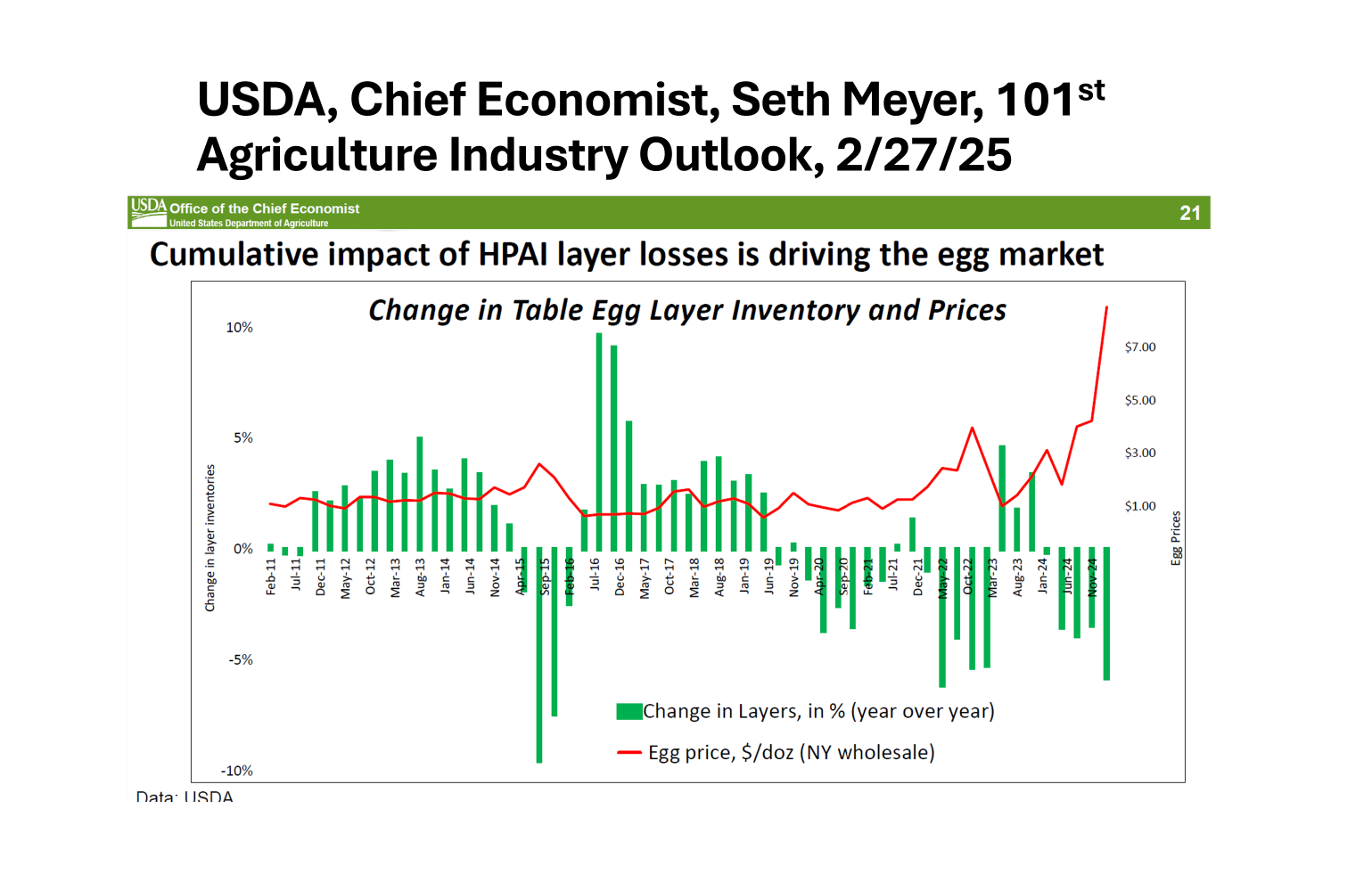
Food price inflation is still in the news. Eggs have become a national security issue. Well, one would think so from the news. Mostly, the egg-laying chickens are sick and dying. But once we get beyond this egg-industry crisis, we … Continue reading →

Posted in analytics, economics, firm, macro, Real Adventures in Economics, science | Tagged American Farm Bureau Federation (AFBF), calculus, Consumer Price Index (CPI), egg price increases, first derivative, food inflation, food price increases, food prices, like zooming in on an elephant, low supply of eggs, magnification of price change, making sense of the calculus of food price increases, second derivative, Thanksgiving Meal Survey | Leave a reply

A Century of Lessons in US Soybean Production – Real Adventures in Economics

Biomass Rules Posted on January 24, 2025 by Mark JennerJanuary 24, 2025

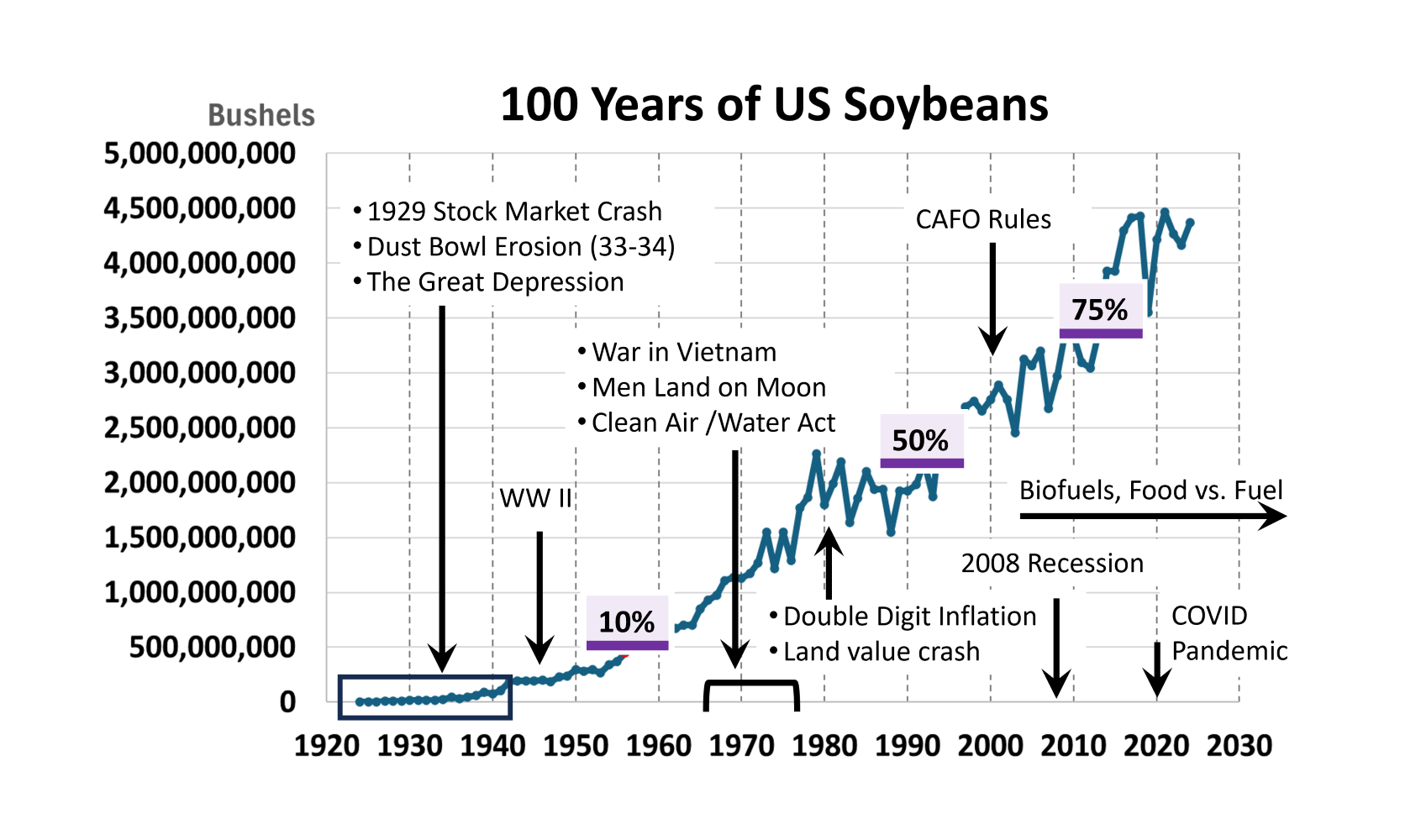
One hundred and one years ago, USDA began counting the production of soybeans on US farms.  This is not because that is when farmers began harvesting soybeans for grain.  No.  This is when the quantity of soybean production was sufficient … Continue reading →

Posted in analytics, economics, firm, macro, policy, Real Adventures in Economics, science | Tagged 1924, 2024, a century of lessons in US soybean production - real adventures in economics, century of lessons, consumer choice, demand, macroeconomic policy, microeconomic technology, production is increasing, real adventures in economics, soybean growth like biofuel industry growth., supply, US soybean production | Leave a reply

Lab-Cultured Food has Arrived for Farm and Factory

Biomass Rules Posted on January 13, 2025 by Mark JennerJanuary 14, 2025

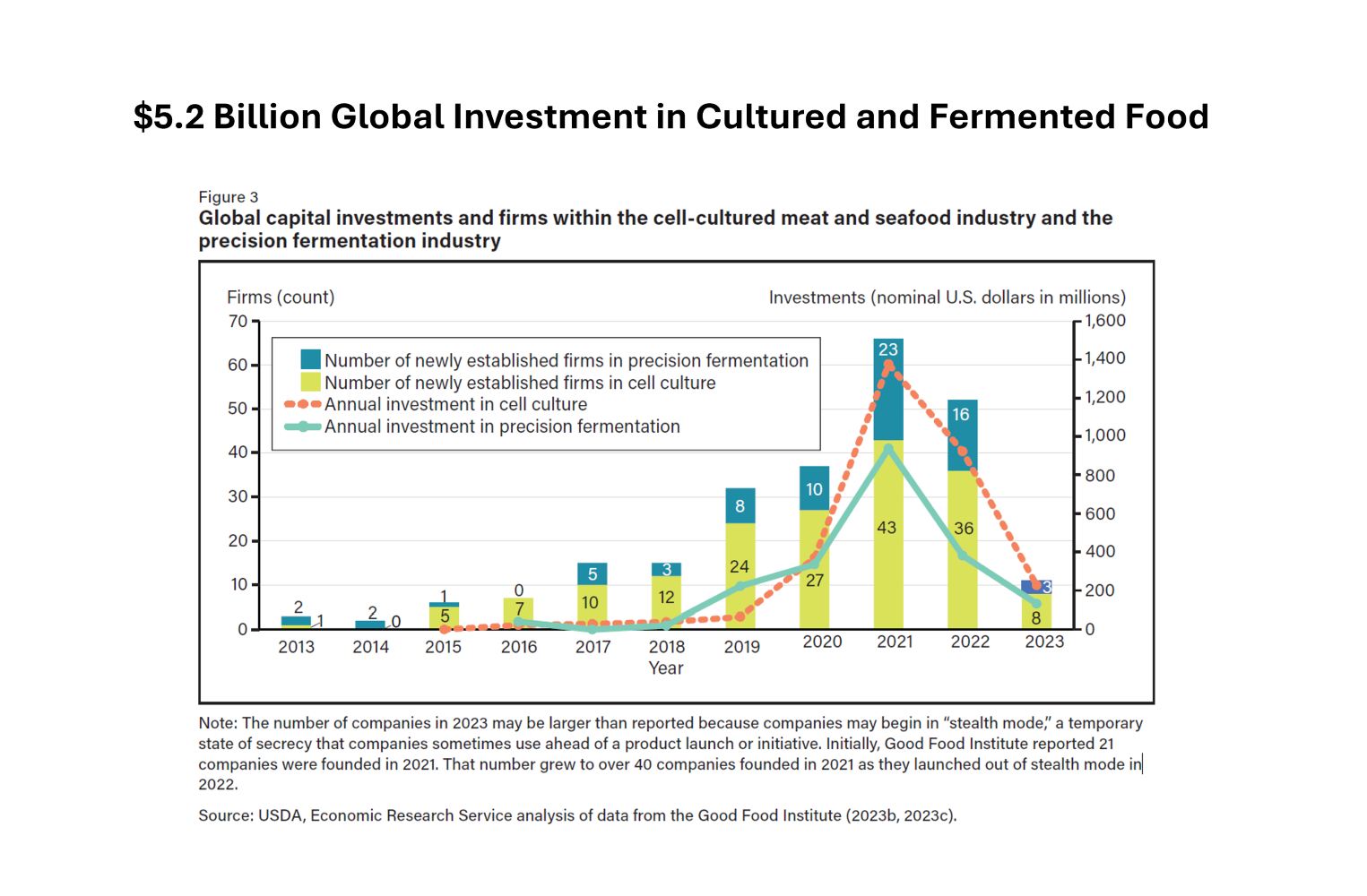
Fifteen years ago, I mentioned to my brilliant director at University of California, Davis, California Biomass Collaborative, that I thought we were heading to a future where we could produce milk and meat without animals, through cellular regeneration.  We had … Continue reading →

Posted in definition, economics, farm, firm, macro, policy | Tagged Advanced Notice of Proposed Rulemaking (ANPR), cellular agriculture, Economic Research Service (ERS), Economics of Cellular Agriculture, factory, farm, fermentation, food, Food and Drug Administration (FDA), food safety, Food Safety Inspection Service (FSIS), global investment $5 billion dollars, lab-cultured, lab-cultured food has arrived for farm and factory, public transparency, regulatory oversight, USDA | Leave a reply

Farm Size, Asset Management, and Area Under Glass

Biomass Rules Posted on January 7, 2025 by Mark JennerJanuary 7, 2025

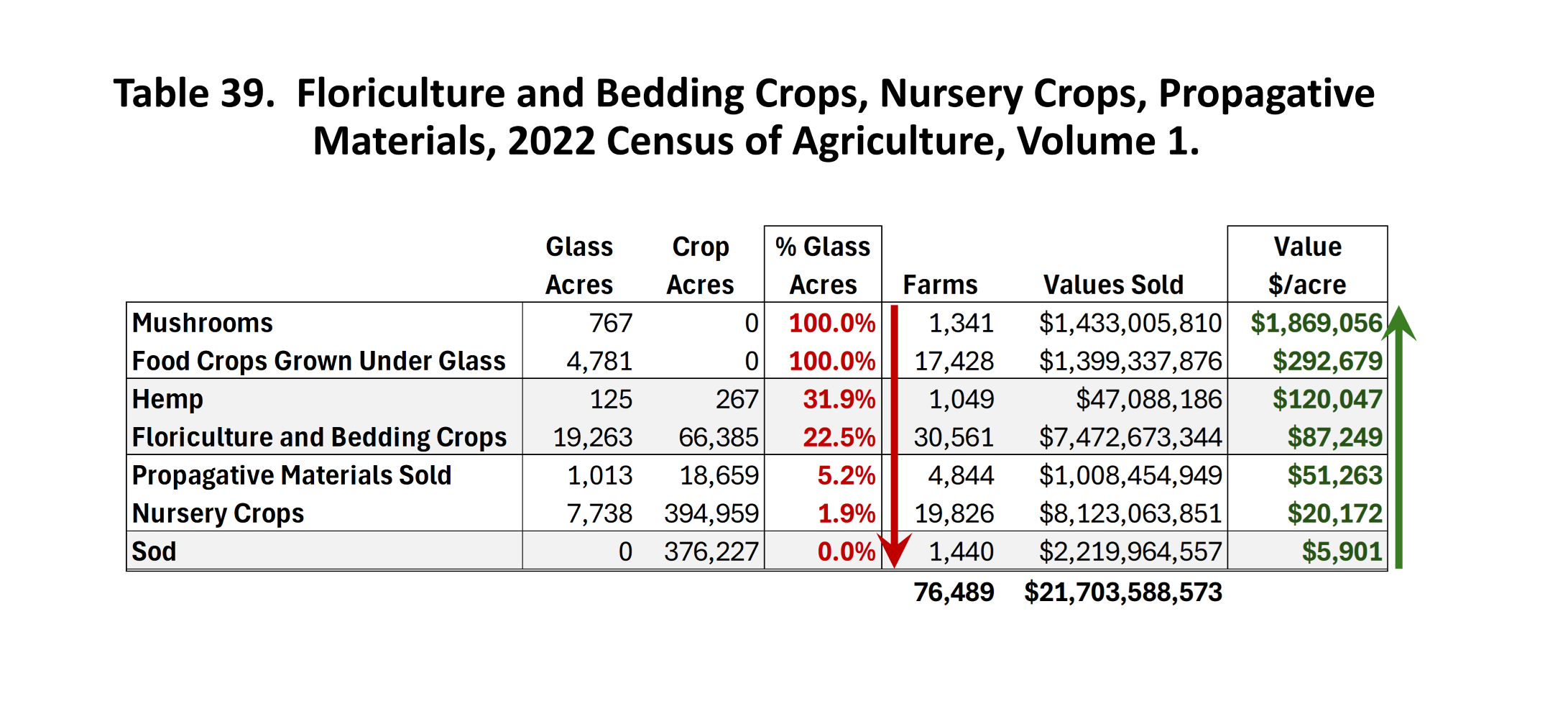
US Farm size is difficult to label in a quantitative way.  When a measure is easy to derive, it is not very relevant.  While moving toward unpacking cellular agriculture in the next few posts, there are formative steps to cover … Continue reading →

Posted in definition, economics, farm, firm, policy | Tagged area under glass, asset management, cellular, cellulose conversion, farm size, floriculture and bedding, food and animal feed, food crops, fuel and energy, hemp, microbial, mushrooms, nitrogen fixation, nursery crops, propagative materials, sod, soil microbes, transformation, waste treatment and utilization | Leave a reply

Food Price Inflation is Small Relative to Production and Manufacturing

Biomass Rules Posted on December 5, 2024 by Mark JennerDecember 5, 2024

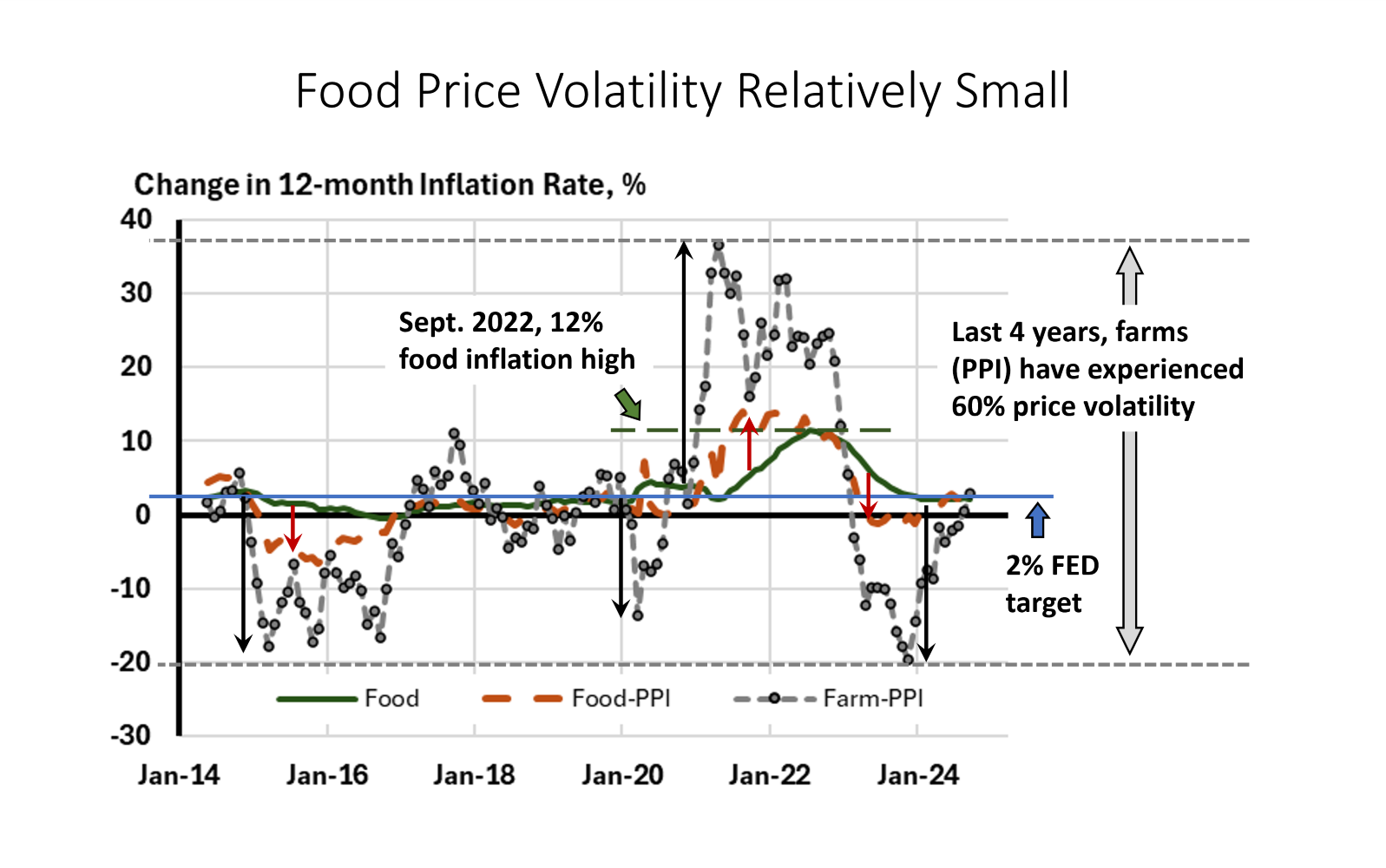
If this chart looks familiar, it is because this is the food price inflation chart used in the post, ‘Food Prices are Not Driving 2024 Inflation – Real Adventures in Economics.  The difference is the scale of the vertical axis.  … Continue reading →

Posted in economics, firm, macro, policy | Tagged commodity-dependent, farm bill, farmers do not set prices, fluctuation, food price inflation, food price inflation is small relative to production and manufacturing, innovation, manufacturing, price volatility, Producer Price Index (PPI), production, relatively small, tariffs, volatility inverse to value | 1 Reply

Hidden Benefits of Declining Hog Pastures

Biomass Rules Posted on November 12, 2024 by Mark JennerDecember 30, 2024

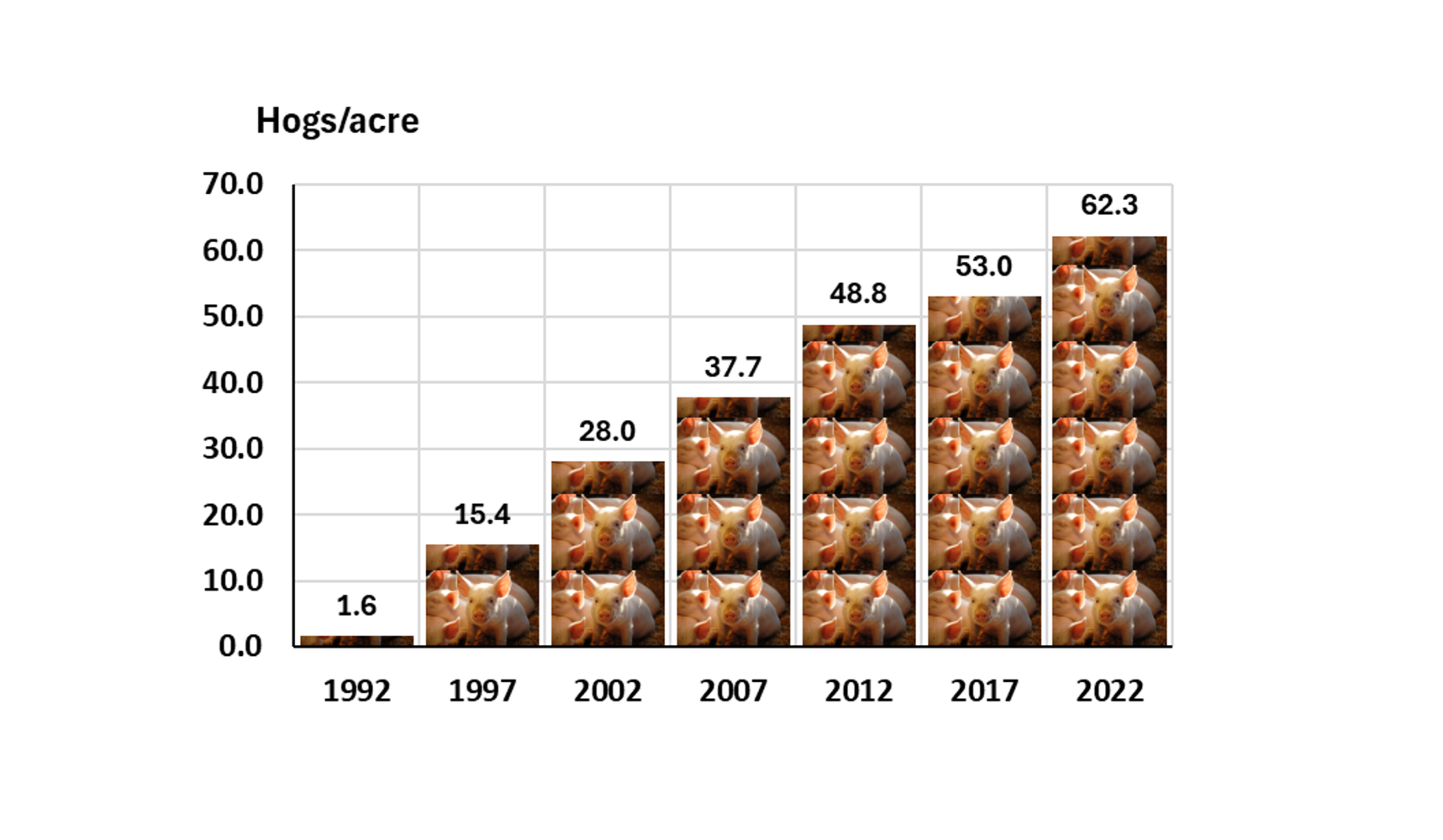
The United States is losing farmland but productivity and output continue to increase.  Last week, the loss of 11 million acres of pastureland to cropland was explored.  That blog also examined the over emphasized claims on cattle as an environmental … Continue reading →

Posted in economics, farm, firm, policy | Tagged declining hog pastures, Dust Bowl, Farm Services Agency (FSA), hidden benefits, hidden benefits of declining hog pastures, hogs per acre, increased animal welfare, increased density, increased hog production, indoor hogs, Natural Resource Conservation Service (NRCS), reduced emissions, reduced erosion, USDA | Leave a reply

Community Wealth Creation Reflects Both Micro and Macroeconomics

Biomass Rules Posted on July 11, 2024 by Mark JennerJuly 11, 2024

All of the ‘local market’ references in the Greenville, Illinois Independence Day post have evolved from guiding farmers and agribusinesses for decades on moving bulky, undervalued manure and biomass residues.  The farther they travel, the less reusable value they have.  … Continue reading →

Posted in economics, firm, macro, wealth creation | Tagged community, community wealth creation reflects both micro and macroeconomics, cultural capital, cultural values, financial capital, human capital, intellectual capital, local influence, macroeconomics, microeconomics, monetize, natural capital, physical capital, political capital, rural, social capital, volunteer hours, wealth creation | Leave a reply

Utility-Scale Solar and Wind Development in Rural Areas: Land Cover Change (2009–20)

Biomass Rules Posted on June 26, 2024 by Mark JennerJune 26, 2024

Karen Maguire, Sophia J. Tanner, Justin B. Winikoff, and Ryan Williams USDA, Economic Research Service, May 2024 The following findings were reported in this interesting report. This study examines land cover surrounding rural solar and wind installation sites from 2009–20. … Continue reading →

Posted in economics, firm, policy | Tagged change, cropland, development, energy, footprint, installation, land cover, land in farms, pastureland, rural areas, solar, utility-scale, utility-scale solar and wind development in rural areas land cover change 2009–2020, wind | Leave a reply

Post navigation

← Older posts
Newer posts →

Recent Posts

  • Nora Goldstein and the BioCycle Legacy Continue
  • The Unsung Role of Gravity in Residential Energy System Operation
  • Three Flavors of Production Information Aid Farmers in January 2026
  • Buying a Farm with the Sweat of One’s Brow is an American Dream
  • Industry Terminology has a Powerful Policy Impact – Definitive Power

Mark Jenner, PhD
Biomass Rules
Greenville, IL 62246
c. 618.223.9331
e. biomassrules@gmail.com

Linked In Logo for Mark Jenner's Profile including Biomass Rules.com!

Mission Statement:
Providing solutions through the strategic utilization of all kinds of biomass; the development of new markets for food, fiber, and fuels; and streamlining regulations.

bio·mass:
ˈbī-ō-ˌmas. noun. 1 : the unit area or volume of living matter, 2 : plant materials and animal waste used as renewable feedstocks into new processes.

rules:
'rül. 1: noun. 1 : regulations, bylaws or governing procedure, 2: verb. a : to exert control, direction, or influence on, b : to declare authoritatively.

Manure…
is not a four-letter word.

©2024—Biomass Rules—All Rights Reserved.

↑